Together they support a continuous workflow for strengthening discovery as AI-driven experiences evolve.
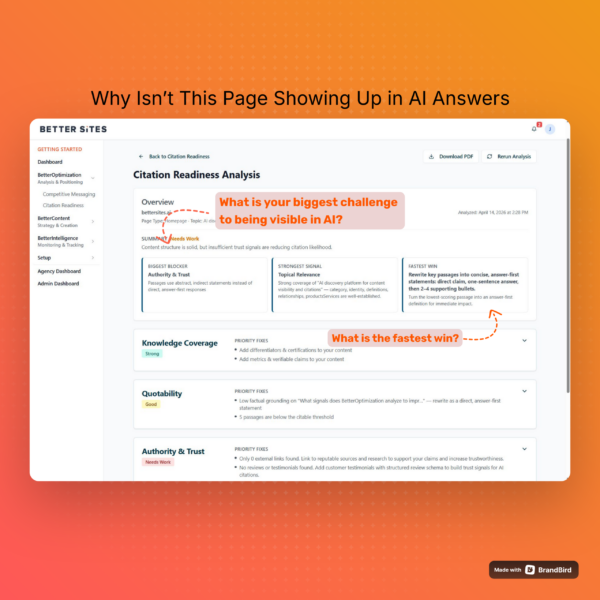
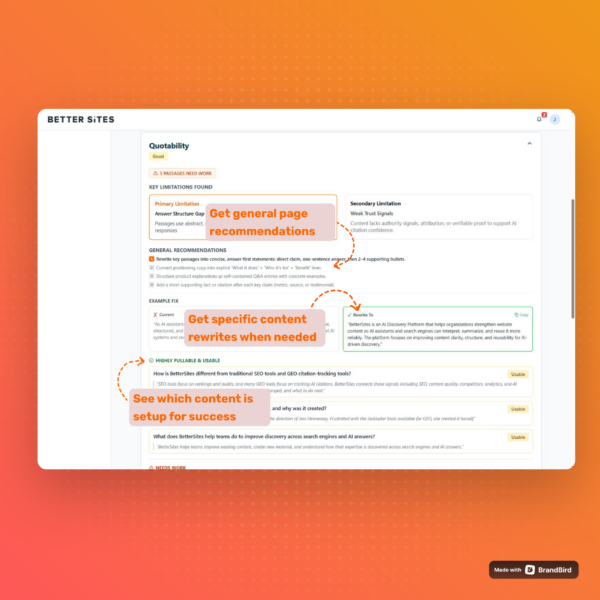
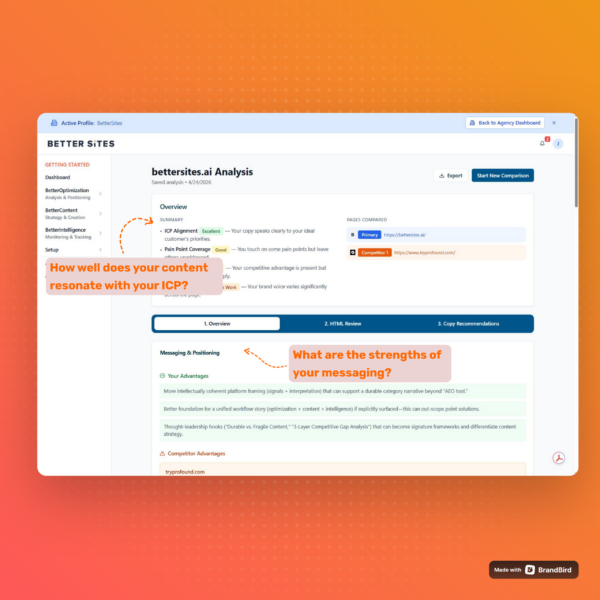
BetterOptimization evaluates how clearly your pages communicate topics and how easily AI systems can interpret and reference them.
It analyzes content structure, authority signals, technical accessibility, and extractable sections to identify improvements that strengthen citation readiness.
Key capabilities:
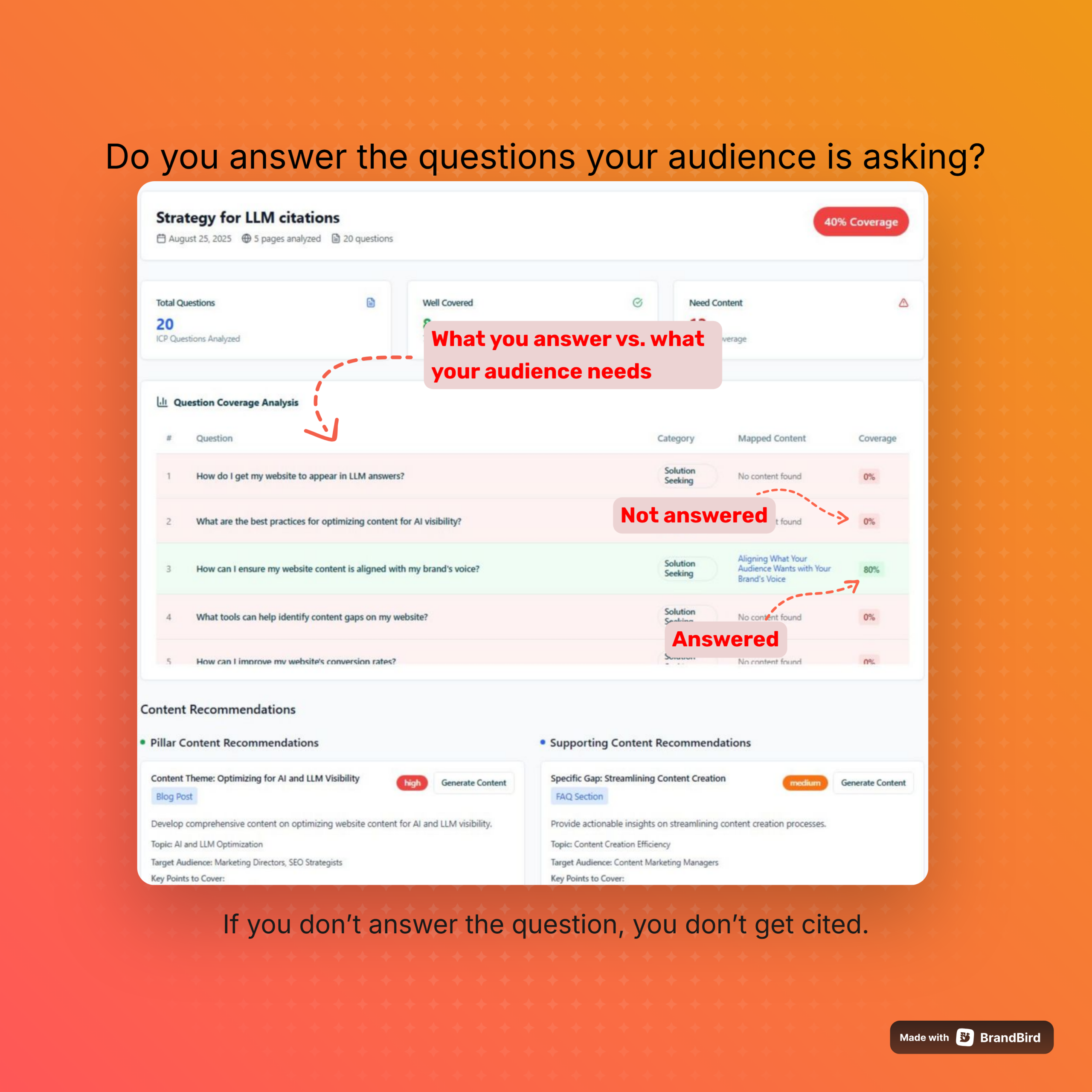
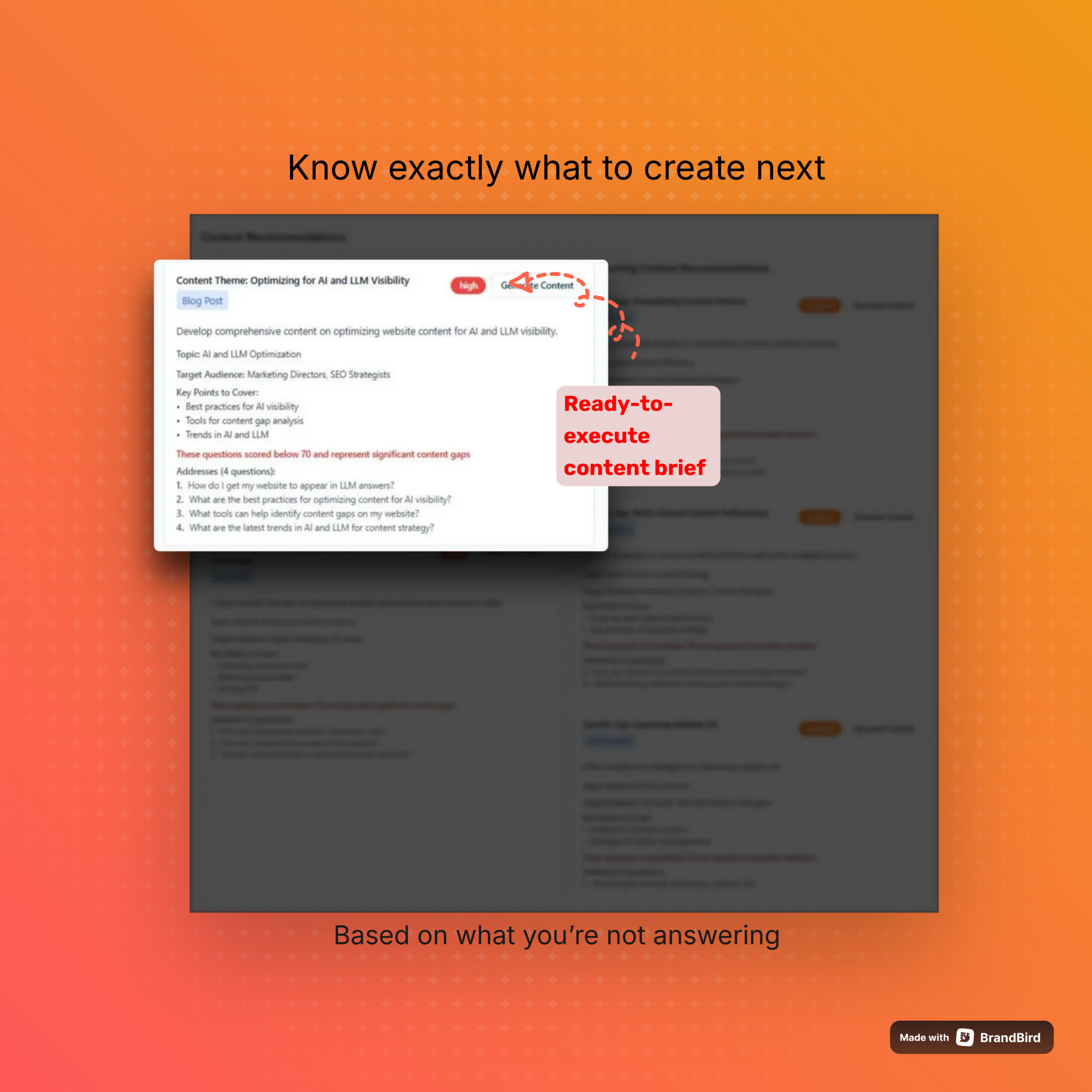
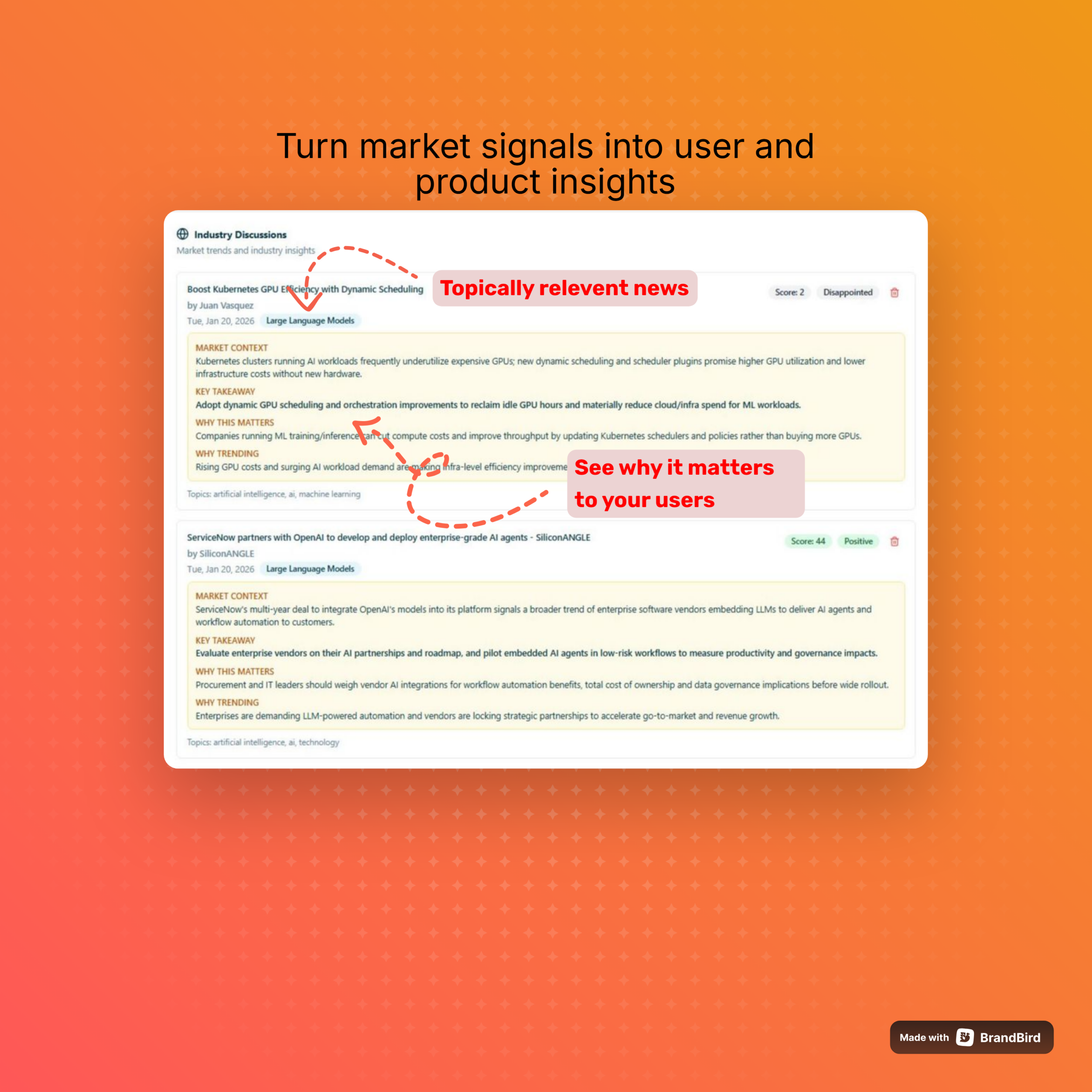
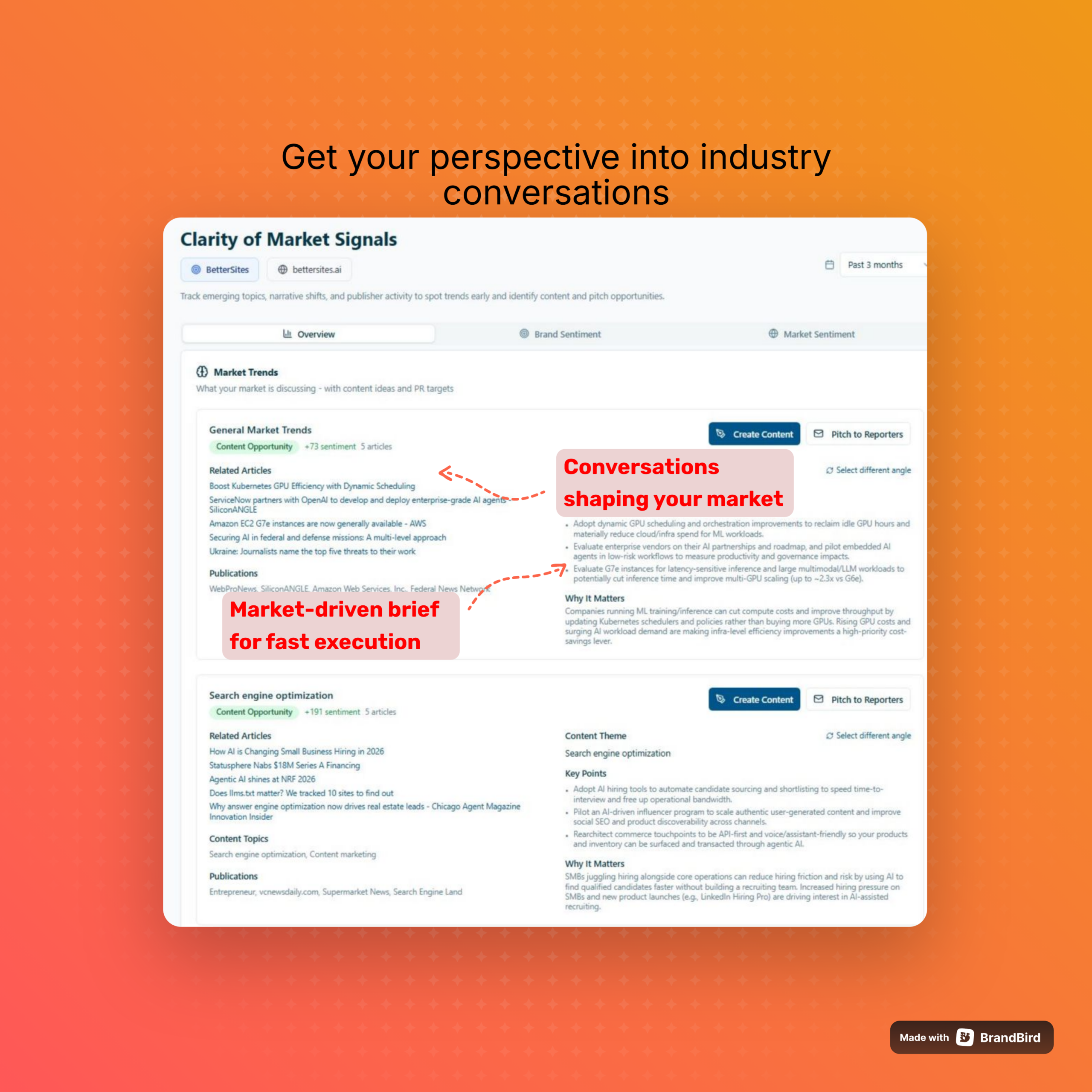
BetterContent turns market signals into content strategy and generation.
It identifies where your content is strong, where coverage is thin, and where competitors are gaining visibility so teams can expand coverage strategically.
Key capabilities:

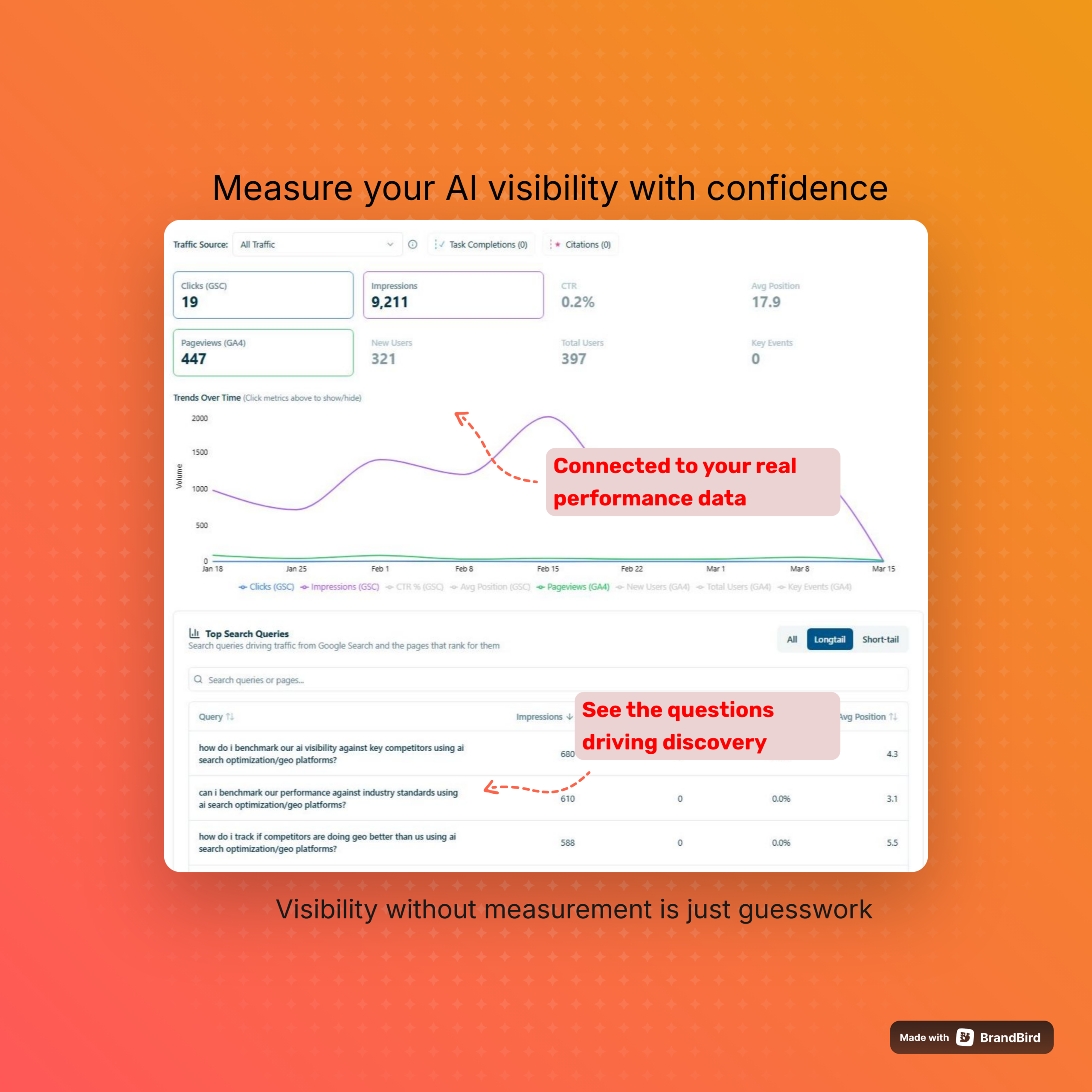
BetterIntelligence monitors the signals shaping discovery across AI answers, competitors, and performance data.
By connecting brand monitoring, sentiment, and analytics insights, it helps teams understand what changed and why their visibility is shifting.
Key capabilities:
A: While Google search accounts for 89% of the search market, 13% of those users are using AI Overviews to get their answers. The trend for using AI overview , ChatGPT or any of the other LLMs is just increasing.
A: AI systems don’t rank pages the way search engines do. They select content that’s easiest to interpret, extract, and trust in the moment. If competitors are clearer, more structured, or more complete on a topic, they get used by LLMs even if you outrank them in search.
A: BetterSites was developed in 2025 by Resonate Online at the direction of Jess Hennessey. Frustrated with the lackluster tools available for GEO, she created on herself. Frankly, it blows them all away.
A: Citation readiness is how easy your content is for AI to understand, extract, and reuse in an answer. It looks at things like structure, clarity, authority signals, and whether your content contains clean, standalone explanations. For a deeper breakdown of how LLMs retrieve and use content, see: https://platform.openai.com/docs/guides/retrieval
A: Start with evaluating the recommendations and determine if they make they make sense. The recommendations are only as good as the profile data you enter.
Start on the sections that are close to being usable but unclear or incomplete. Small changes to structure, headings, and how you explain key ideas often unlock the biggest gains.
A: There is a lot of discussion about what is GEO in comparison to SEO. I am of the opinion that it is related, but different. SEO tools focus on rankings, keywords, and backlinks. BetterSites focuses on how your content is interpreted and reused inside AI-generated answers. If you want context on how Google is shifting toward AI-driven answers, see: https://blog.google/products/search/generative-ai-search/
A: AI visibility (aka prompt tracking) will fluctuate and is not defendable, so it’s not a reliable KPI on its own. Instead, you measure whether your content is becoming clearer, more complete, and easier to extract. You also measure brand awareness & consistency offsite. This is what drives consistent inclusion over time. This is the shift from tracking appearances to improving eligibility.
A: Absolutely not! Most improvements come from refining what’s already there. Cleaning up structure, clarifying explanations, and making key sections more self-contained is the overall theme of GEO. It’s usually continuous improvement, not a full rewrite.
